
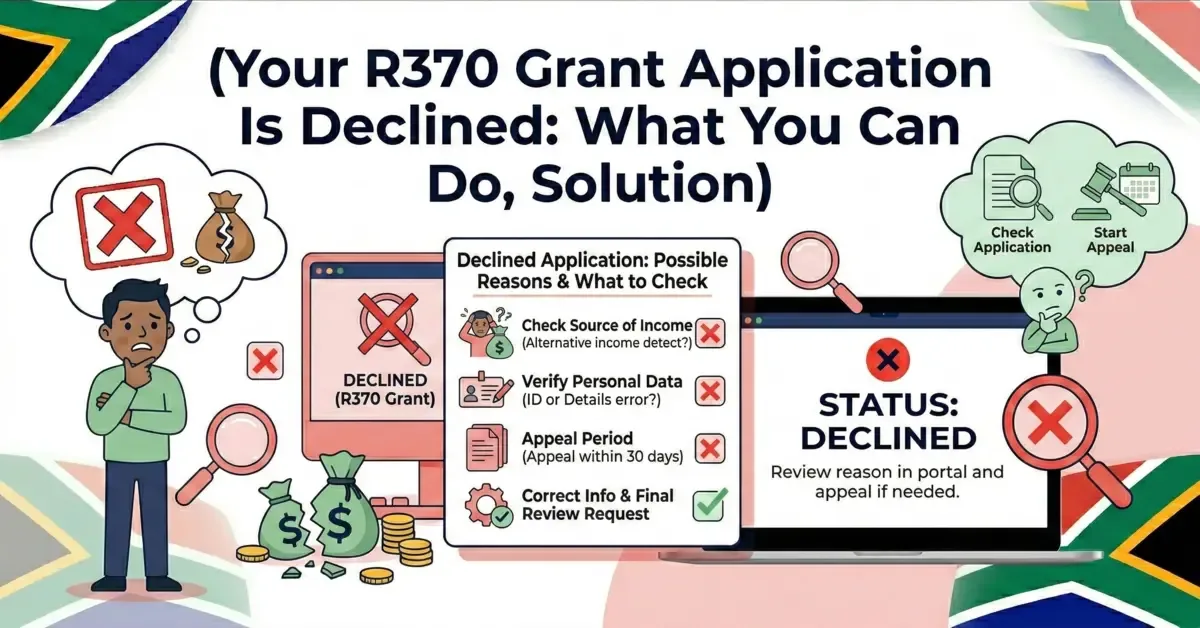
Seeing "Declined" on your SASSA status is stressful, but it is not always the end of the road. Many declines happen because of a fixable detail - a mismatched ID, an old phone number, or a bank deposit that looked like income. This guide explains the real reasons SRD R370 applications get declined, how to fix each one, and exactly how to get your grant back on track.
What "Declined" Means
A declined status means SASSA reviewed your application for that month and decided you did not qualify - and it usually gives a reason. It does not always mean you are permanently disqualified. If you believe the decision is wrong and you meet the SRD eligibility rules, you can appeal.
Top Reasons SASSA Declines an SRD Application
Check your status first to see your exact reason, then match it to the list below:
- Income source identified: a bank deposit or other income above R624 a month flags you as having means. Even a once-off deposit from a friend can trigger this.
- Identity verification failed: your name or ID number does not match the Department of Home Affairs records. Double-check spelling and digits.
- Receiving NSFAS funding: students funded by NSFAS do not qualify for SRD.
- Receiving UIF: UIF payments count as income support, so you cannot get SRD at the same time.
- Age: SRD is only for applicants aged 18 to 60.
- Already receiving another grant for yourself.
- Marked as deceased in government records (a data error you must fix at Home Affairs).
- Employed or self-employed, or flagged for possible fraud (SAFPS).
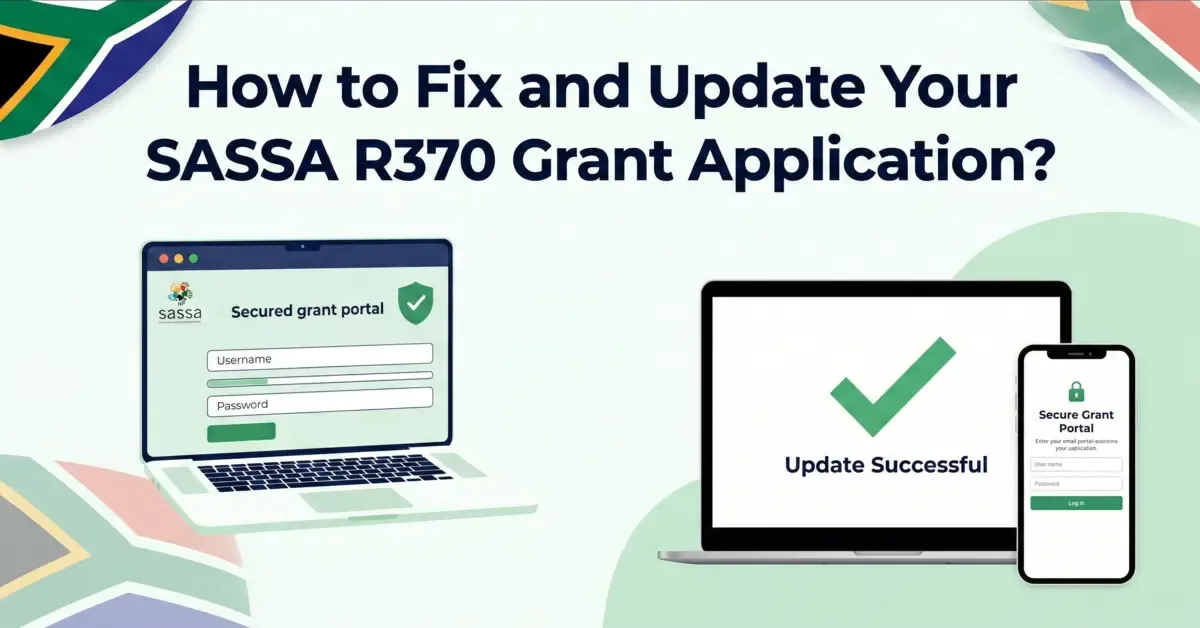
How to Fix It
The smartest first step is to understand the exact reason, then act on it:
- Log in at srd.sassa.gov.za and read the precise decline reason for the month.
- If your details are wrong (name, ID, phone, bank), correct them - see how to update your details.
- If a bank deposit was mistaken for income, you can explain this in your appeal.
- If you genuinely do not qualify that month, you do not need to do anything - check again next month.
How to Appeal a Declined Application
If you qualify but were still declined, lodge an appeal:
- Go to srd.sassa.gov.za/appeals and click the Appeal section.
- Enter your ID and the phone number you applied with, and confirm the PIN.
- Choose the declined month and select your appeal reason.
- Submit and keep the reference number.
You must appeal within 30 days of the declined status. For the full walkthrough (online, WhatsApp and free legal help), see our SASSA appeal guide.
How Long Does It Take?
An appeal is reviewed by an independent tribunal and usually takes 60 to 90 days. You will get an SMS with the outcome. If it succeeds, your grant is reinstated and back-paid. Check your appeal status on the appeals portal in the meantime, not the normal status page.
What You Should NOT Do
- Do not pay anyone to "fix" or "approve" your grant - it is always free, and these offers are scams.
- Do not miss the 30-day appeal window.
- Do not open multiple applications hoping one gets through - duplicates can flag your ID for fraud.
- Do not ignore a declined status if you qualify - silence means you lose the months you were owed.
Avoid Being Declined Again
- Keep your name and ID matching Home Affairs exactly.
- Use a phone number and bank account in your own name.
- Avoid unexplained deposits into your account during the application period.
- Only apply if you have no other income, grant, UIF or NSFAS support.
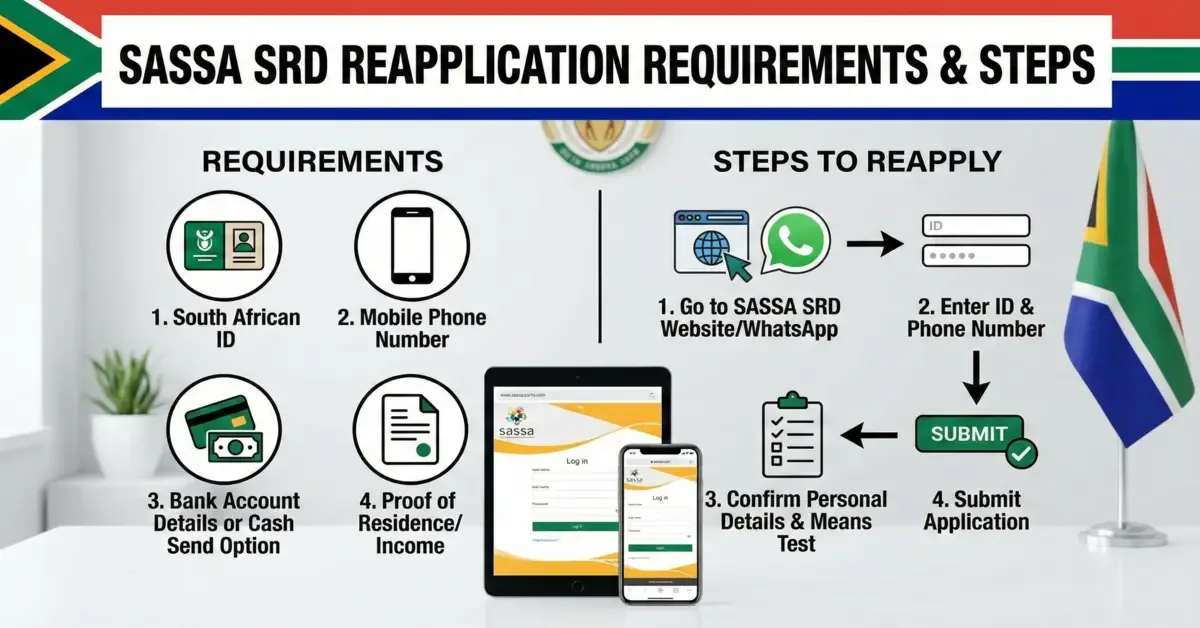
If your application was not declined but expired or your details changed, you may need to reapply instead of appealing.
📚 Sources & References
Share this guide with someone who needs it.
💬 Comments (0)
No comments yet. Be the first to share your thoughts.
Leave a Comment